
This blog post will introduce you to the study “Evaluation of Fucoidan Extracts From Undaria pinnatifida and Fucus vesiculosus in Combination With Anticancer Drugs in Human Cancer Orthotopic Mouse Model” by Maryam Burney et al. The study presents a detailed investigation into how Wakame-derived fucoidan (UPF) and Fucus vesiculosus-derived fucoidan (FVF), when administered in tandem with chemotherapeutic drugs, affect the progression of human breast or ovarian cancers in meticulously developed orthotopic mouse models.
Fucoidan, a natural polysaccharide, exhibits particularly remarkable biological properties among high-molecular-weight compounds, with potent anticancer activity as its most notable characteristic. Research into fucoidan has identified a diverse range of biological characteristics, encompassing anticoagulant and antithrombotic capabilities, antiviral, antitumor, immunomodulatory, antioxidant, and anticomplementary functions.
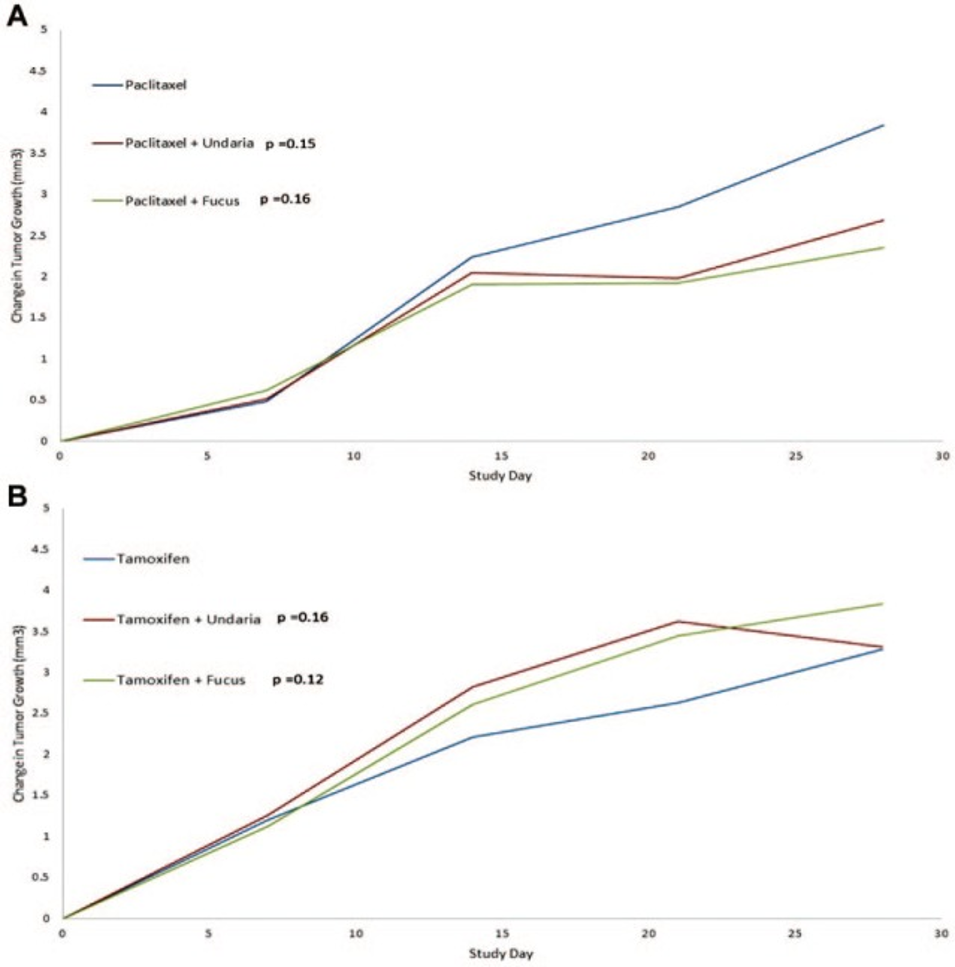
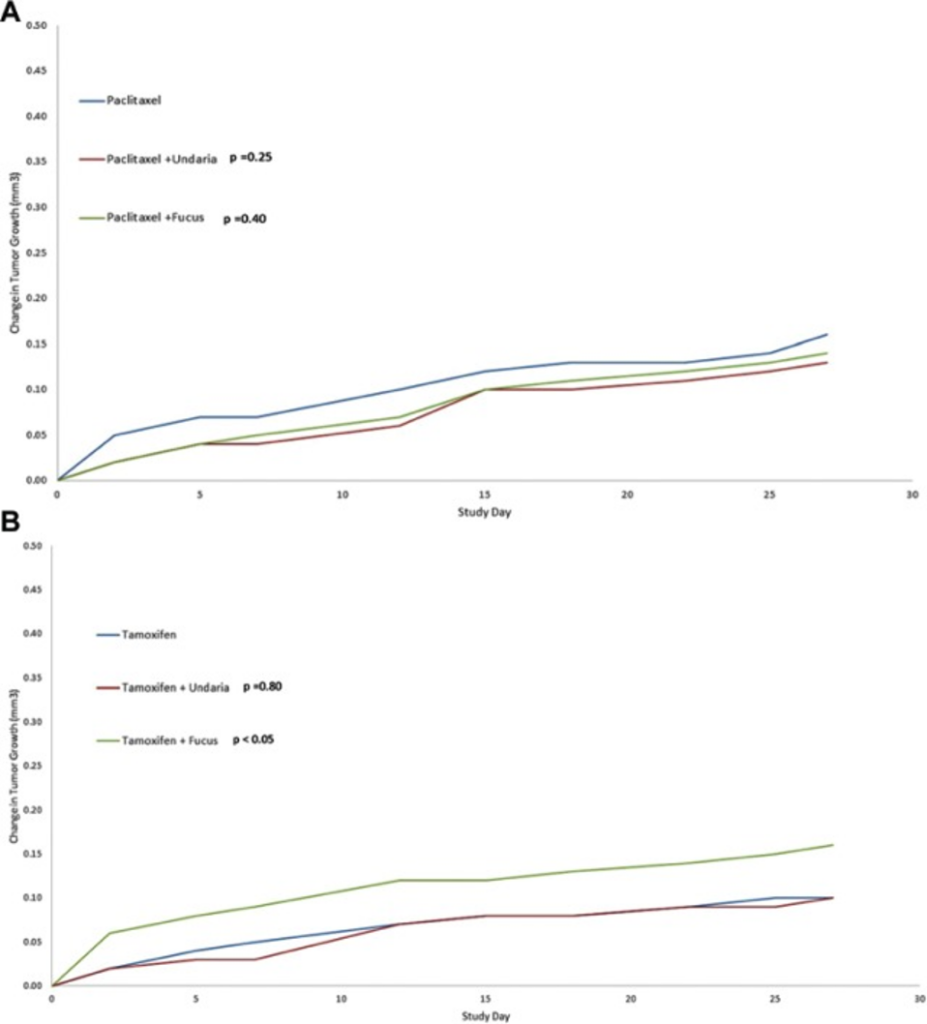
Results from an investigation into the combined use of UPF and paclitaxel revealed that, in orthotopic human ovarian cancer models using either the SKOV3-GFP-Luc or TOV-112d cell lines, this combination did not affect tumor growth, as shown in Figure 1a. The concurrent administration of FVF and paclitaxel in orthotopic human ovarian cancer models, specifically utilizing the SKOV3-GFP-Luc or TOV-112d cell lines, did not result in a notable decrease in tumor proliferation, as depicted in Figure 2a. In the SKOV3-GFP-Luc human ovarian cancer mouse model, when compared to tamoxifen monotherapy, the administration of either UPF or FVF in combination with tamoxifen resulted in no significant changes (Figure 1b). In the TOV-112d human ovarian cancer model, the combined use of FVF and tamoxifen resulted in a statistically significant increase in tumor growth. Nonetheless, when UPF and tamoxifen were used together, they did not significantly alter the speed at which tumors grew in the TOV-112d group (see Figure 2b).
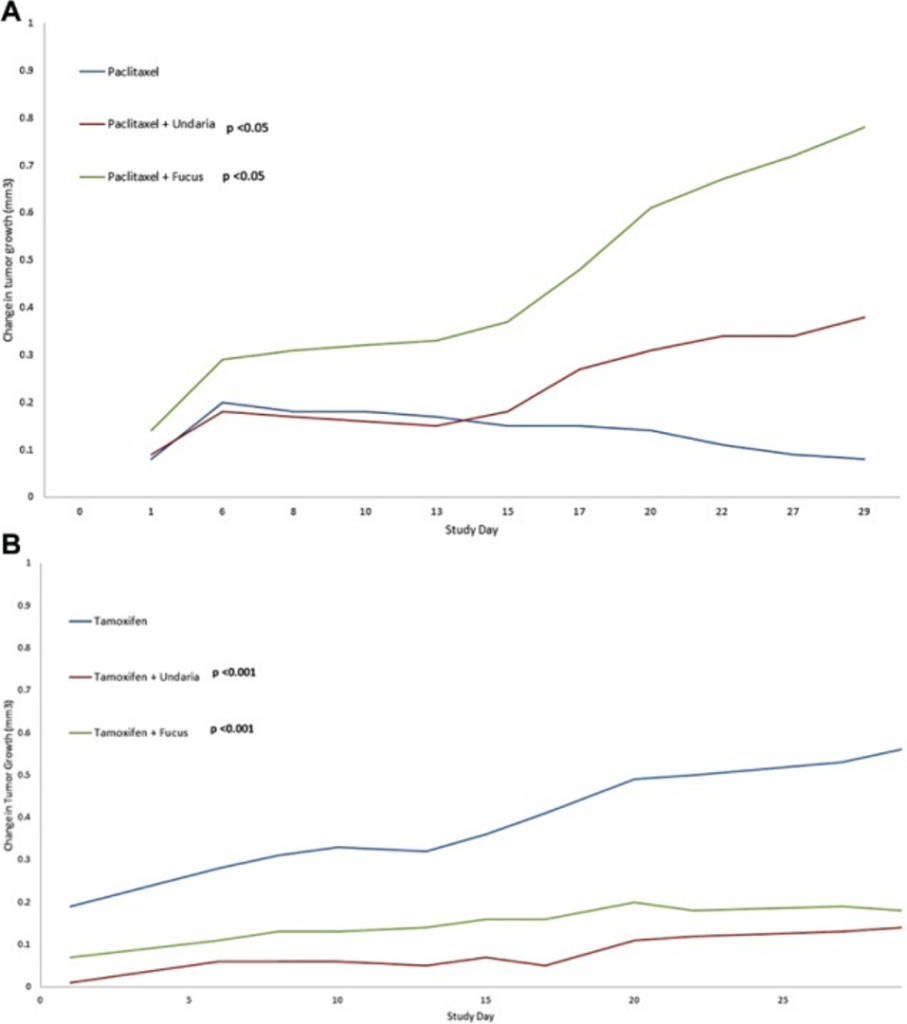
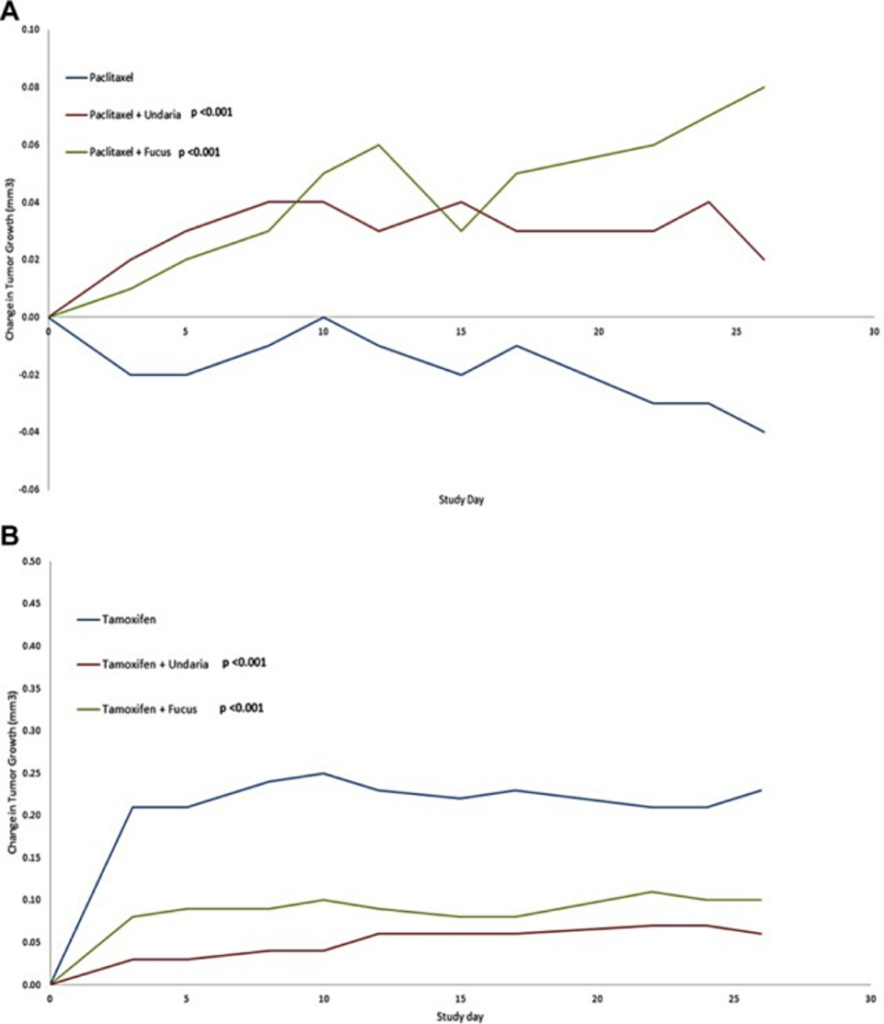
In the MCF-7 breast cancer mouse model, the combined use of UPF/paclitaxel and FVF/paclitaxel resulted in a statistically significant increase in tumor growth compared to paclitaxel monotherapy, as seen in Figure 3a. In the ZR-75 human breast cancer mouse model as well, the combined use of UPF/paclitaxel and FVF/paclitaxel demonstrated a statistically significant increase in tumor growth compared to paclitaxel monotherapy (Figure 4a). The MCF-7 human breast cancer mouse model demonstrated a notable decrease in tumor growth after 28 days when treated with a combination of UPF/tamoxifen or FVF/tamoxifen, as opposed to tamoxifen by itself, as depicted in Figure 3b. Furthermore, a similar reduction in tumor growth was observed in the ZR-75 mouse model following the combined administration of UPF/tamoxifen (P < 0.001) and FVF/tamoxifen (P < 0.001) (See Figure 4b).
The investigation has confirmed that when tamoxifen is administered concurrently with either UPF or FVF, its efficacy in treating breast or ovarian cancer remains unimpaired. Furthermore, in the context of breast cancer, the findings suggested potential for enhanced activity when compared to tamoxifen monotherapy. Previous in vitro studies had suggested that UPF and FVF generally exhibit synergistic activity in combination with paclitaxel. However, the present in vivo investigation, which involved human cancer mouse models, found no observable modification in paclitaxel’s activity when UPF or FVF were administered concurrently with paclitaxel in either of the two human ovarian cancer models studied. Moreover, the study further demonstrated that, in the breast cancer model, UPF or FVF—when co-administered with paclitaxel—may potentially exert an antagonistic effect. To clarify the reasons behind the observed fluctuations in “in vivo” activity when these agents are administered alongside paclitaxel, additional investigation is necessary.
Source: Integr Cancer Ther. 2017 Nov 20;17(3):755–761. doi: 10.1177/1534735417740631